

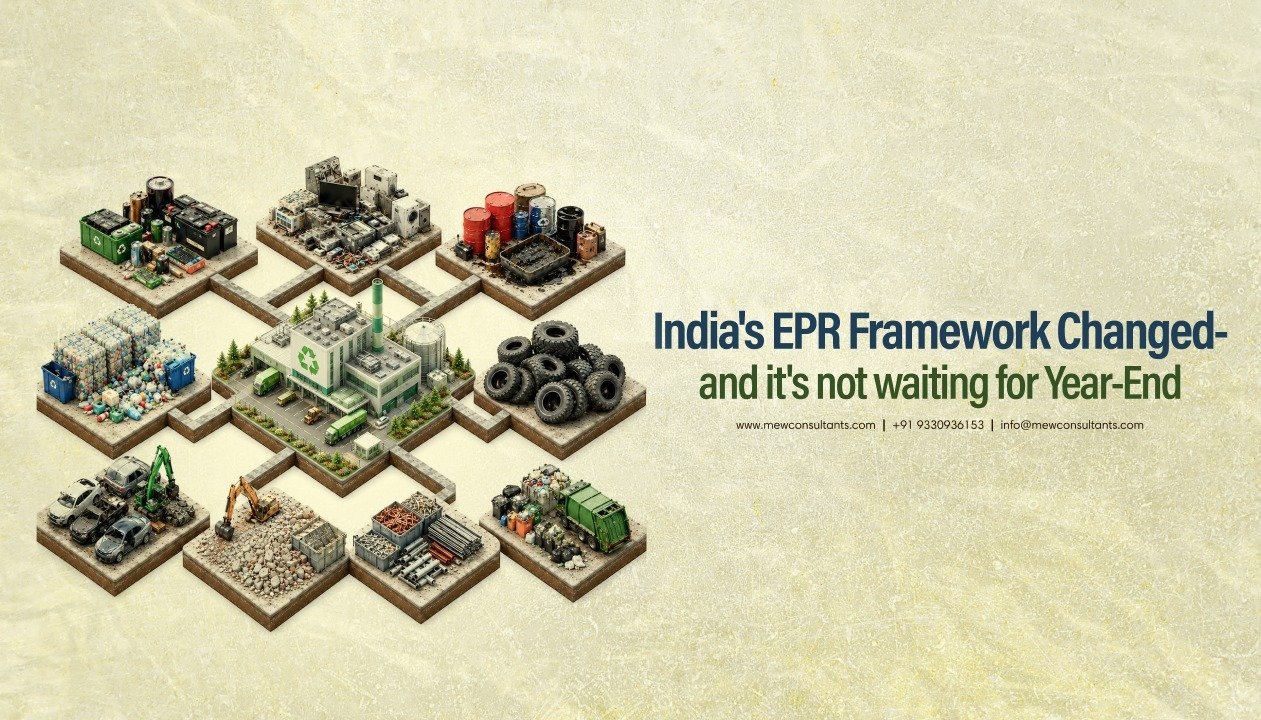
Over recent months, CPCB has rolled out a series of changes that shift how environmental compliance is monitored in India. Rules have changed within the compliance cycle. New portals are live and expecting data. Compliance records are becoming digital, interconnected, and far easier for regulators to cross-verify.
Rules have changed mid-cycle. New portals are now live and expecting data. Compliance records are becoming increasingly digital, connected, and easier for regulators to verify.
For producers, importers, brand owners, recyclers, and waste processors, these developments are worth paying close attention to.
Why This Matters Now
India’s EPR ecosystem is steadily evolving from periodic reporting towards a more digitally integrated compliance framework.
As more waste streams move onto dedicated portals and reporting systems become increasingly interconnected, organisations can no longer treat compliance as a once-a-year filing exercise. Accuracy, documentation, and consistency across filings are becoming more important than ever.
Here are four developments that deserve immediate attention.
1. Plastic EPR — EOL certificates withdrawn, and no more cross-category adjustment
CPCB has withdrawn the earlier provision (allowed via its November 28, 2025 notice) that let companies use End-of-Life (EOL) disposal certificates to meet recycling targets. Alongside this, the three recycling categories (I, II, and III) can no longer be interchanged — each target must now be met strictly within its own category. The withdrawal took effect immediately, with no transition grace period.
What This Means
Review your certificate procurement strategy, target calculations, and annual reconciliation plans immediately.
For many organisations, this changes how EPR obligations must be planned and fulfilled throughout the compliance year.
2. The End-of-Life Vehicle (ELV) Portal Is Live and Expecting Registrations
The ELV EPR portal has moved from preparation to implementation.
Vehicle manufacturers, automotive component producers, and Registered Vehicle Scrapping Facilities are now expected to register, submit compliance data, and digitally track recycling and disposal quantities through the portal. Without portal registration, an RVSF cannot issue EPR certificates and producers cannot meet obligations through unregistered facilities
What This Means
If your organisation falls within the ELV ecosystem and has not yet completed registration and compliance planning, now is the time to act.
This is no longer a future requirement.
3. Filings Across Multiple Portals Are Becoming Increasingly Connected
UCAMS (Unified Consent and Authorization Management System) for consent management, the Electronic Trading Platform (EPRETP) for certificate trading, and Single Sign-On across the Battery, E-Waste, Plastic, Tyre, Used Oil, and ELV portals mark a clear move toward an integrated compliance environment. Worth noting: the EPRETP permits direct trading between obligated entities and recyclers/processors — no brokers are allowed on the platform.
As digital systems become more interconnected, consistency in reporting across portals becomes increasingly important.
What This Means
Review your filings, registrations, certificates, and supporting documentation across all applicable portals.
Discrepancies that may previously have remained isolated are becoming easier to identify within a digitally connected ecosystem.
4. EPR Obligations Are Beginning to Align with Broader Sustainability Expectations
The Greenhouse Gases Emission Intensity Target (Amendment) Rules, 2025 — effective from January 13, 2026 — signal a broader regulatory push toward binding environmental accountability under the Carbon Credit Trading Scheme. At the same time, revised Consent to Establish and Consent to Operate frameworks are placing greater weight on an organisation’s compliance track record. The battery sector should also watch the draft Battery Pack Aadhaar (BPA) system from MoRTH, which proposes cradle-to-grave traceability for EV and large industrial batteries.
What This Means
A well-maintained compliance record is increasingly becoming a strategic business asset rather than simply a regulatory requirement.
What Producers Should Do Now
- Reassess category-wise EPR target planning
- Verify registrations across all applicable CPCB portals
- Conduct a cross-portal compliance review
- Reconcile certificates, transactions, and supporting documentation
- Establish quarterly compliance audits instead of relying solely on annual reviews
India’s EPR framework is no longer something organisations can afford to revisit only at filing time.
The direction is clear: greater digitalisation, greater traceability, and greater scrutiny of compliance records.
Businesses that actively monitor regulatory developments, maintain accurate documentation, and regularly review their compliance position will be far better prepared than those reacting only when filing deadlines arrive.
MEW Consultants works with producers, importers, brand owners, recyclers, and waste processors across India supporting EPR registrations, compliance filings, reverse logistics development, waste channelisation networks and ongoing regulatory advisory across multiple waste streams.
If any of these developments affect your compliance strategy, our team would be happy to help.
Phone : +91 9330936153
Email : info@mewconsultants.com
Web : www.mewconsultants.com