
our mewsletter


FREQUENTLY ASKED QUESTIONS
1. What is the MEW Consultants Mewsletter?
Mewsletter is the knowledge and insights platform of MEW Consultants, covering the latest developments in EPR compliance, waste management, recycling, environmental regulations, sustainability, and the circular economy in India. It is designed to help businesses stay informed about regulatory changes and understand how they may affect their compliance responsibilities.
2. What topics are covered in the Mewsletter?
The Mewsletter covers topics related to Extended Producer Responsibility (EPR), CPCB compliance, EPR credits, waste management, recycling, environmental regulations, sustainability, circular economy, ESG, and emerging compliance requirements across different waste streams.
3. Why should businesses follow EPR and environmental compliance updates?
EPR regulations and environmental compliance requirements continue to evolve. Staying updated can help producers, importers, brand owners, recyclers, and other businesses identify regulatory changes early, prepare the required documentation, and avoid compliance gaps.
4. Does the Mewsletter cover CPCB and EPR regulatory updates?
Yes. The Mewsletter covers relevant developments related to CPCB requirements, EPR regulations, portal processes, compliance expectations, and changes that may affect producers and recyclers.
5. Which EPR waste streams are covered by MEW Consultants?
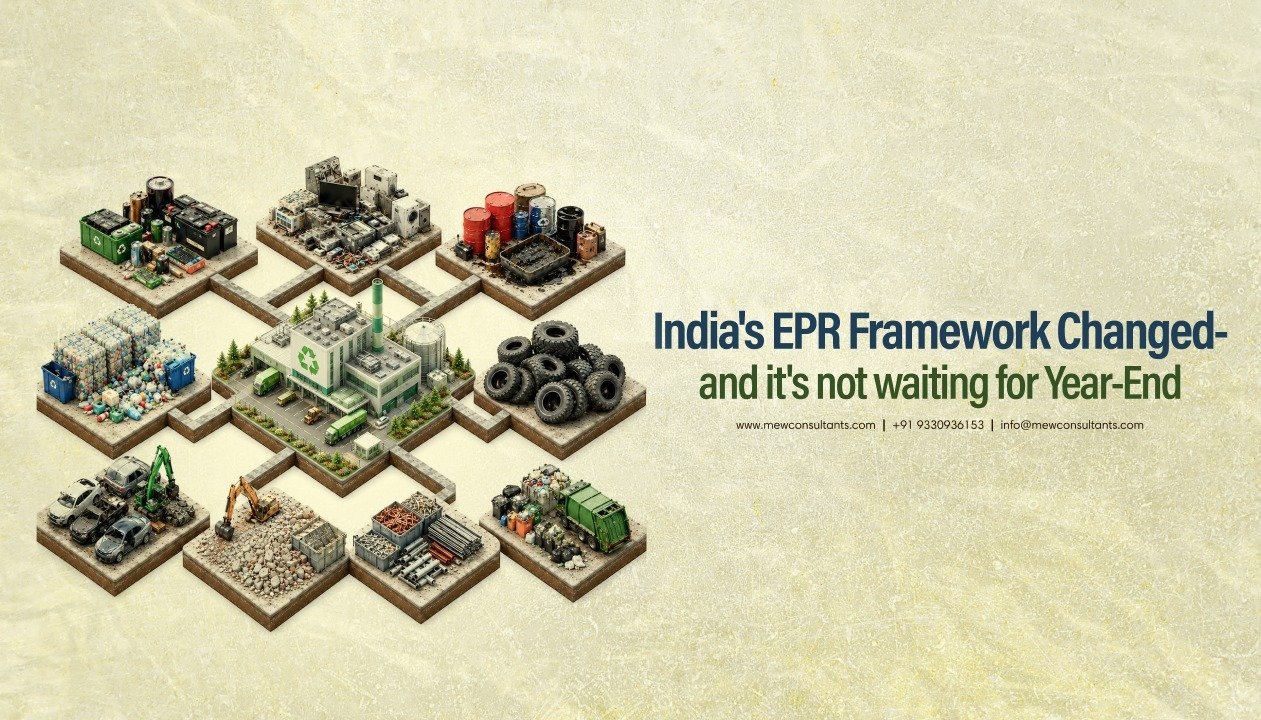
MEW Consultants provides compliance and waste management support across multiple regulated waste streams, including E-Waste, Battery Waste, Plastic Waste, Used Oil, Tyre Waste, End-of-Life Vehicles, Construction & Demolition Waste, and Non-Ferrous Metals.
6. What can producers and brand owners learn from the Mewsletter?
Producers and brand owners can use the Mewsletter to understand EPR obligations, target fulfilment, EPR credit procurement, compliance documentation, regulatory developments, and practical steps for managing their environmental compliance responsibilities.
7. What can recyclers learn from the Mewsletter?
Recyclers can find insights into EPR credit generation, compliance documentation, regulatory requirements, portal-related developments, traceability, recycling operations, and evolving expectations around environmental compliance.
8. Why is EPR compliance becoming more focused on traceability and verification?
Environmental compliance is increasingly moving beyond simple documentation and towards demonstrable, traceable outcomes. Businesses may need to ensure that reported quantities, recycling activities, authorisations, credits, and supporting records are consistent and capable of standing up to regulatory scrutiny.
9. What are EPR credits and why are they important?
EPR credits represent compliance activity generated through eligible recycling or processing under applicable EPR frameworks. Producers and other obligated entities may use eligible credits to meet their prescribed EPR obligations, subject to the applicable regulations and CPCB requirements.
10. How can businesses stay updated with changing EPR regulations in India?
Businesses can regularly monitor CPCB notifications, regulatory updates, portal changes, and credible industry resources such as the MEW Consultants Mewsletter. However, businesses should assess every regulatory change against their specific waste stream and compliance obligations.
11. Does the Mewsletter discuss practical EPR compliance challenges?
Yes. The Mewsletter focuses not only on regulations but also on practical challenges businesses may encounter during EPR registration, target fulfilment, credit management, documentation, reporting, recycling, and waste channelisation.
12. How does waste management connect with EPR compliance?
EPR compliance depends on responsible management of products and waste at the end of their useful life. Collection, reverse logistics, channelisation, recycling, documentation, and reporting can therefore form important parts of an effective EPR compliance system.
13. What is the connection between EPR and the circular economy?
EPR encourages businesses to take greater responsibility for the post-consumer life of products and materials. Effective collection, recycling, recovery, and reuse can help reduce waste and keep valuable resources within the economy, supporting the principles of a circular economy.
14. Does MEW Consultants provide EPR compliance support beyond regulatory information?
Yes. MEW Consultants provides end-to-end EPR compliance and waste management support, including registration, target planning, credit generation and procurement support, documentation, reporting, recycler coordination, reverse logistics, and compliance management.
15. Can the Mewsletter help businesses understand new environmental regulations?
Yes. Mewsletter articles are intended to simplify complex environmental and EPR developments and explain their practical relevance to businesses. For company-specific obligations, businesses should evaluate the applicable regulations and obtain appropriate professional guidance.
16. How often should businesses review their EPR compliance?
EPR compliance should not be treated as a once-a-year activity. Businesses should periodically review their targets, sales or procurement data, credits, recycler documentation, portal records, filings, and applicable regulatory updates to identify potential gaps before deadlines or regulatory scrutiny.
17. Why is early preparation important for EPR compliance?
Early preparation gives businesses more time to verify data, identify documentation gaps, plan EPR targets, evaluate credit requirements, coordinate with recyclers, and complete portal filings within applicable timelines.
18. Where can I read the latest EPR and waste management insights from MEW Consultants?
The latest insights are published in the Mewsletter section of the MEW Consultants website, covering EPR compliance, waste management, recycling, environmental regulations, sustainability, and related developments.